
Dograh vs. Vapi: Why My AI Booking Agent Runs on Open Source
I started Bookee on Vapi last November, but the tool calls kept failing silently. Why I rebuilt my AI booking agent on open-source Dograh.
June 7, 2026

I started building Bookee last November on Vapi. It's a slick, hosted voice platform, and for a while it felt like magic — a lead fills out a form, my AI voice calls them back, books the meeting. Then the part that actually matters kept breaking: the tool calls. Mid-conversation, the agent was supposed to check my calendar and write a booking back, and the tool endpoints would silently fail to receive the lead's data. No error I could catch. Just a call that went nowhere. Months later, Bookee runs on Dograh — an open-source AI voice agent — and this is the honest story of why I switched.
The hard part of an AI booking agent isn't talking — it's tool calling
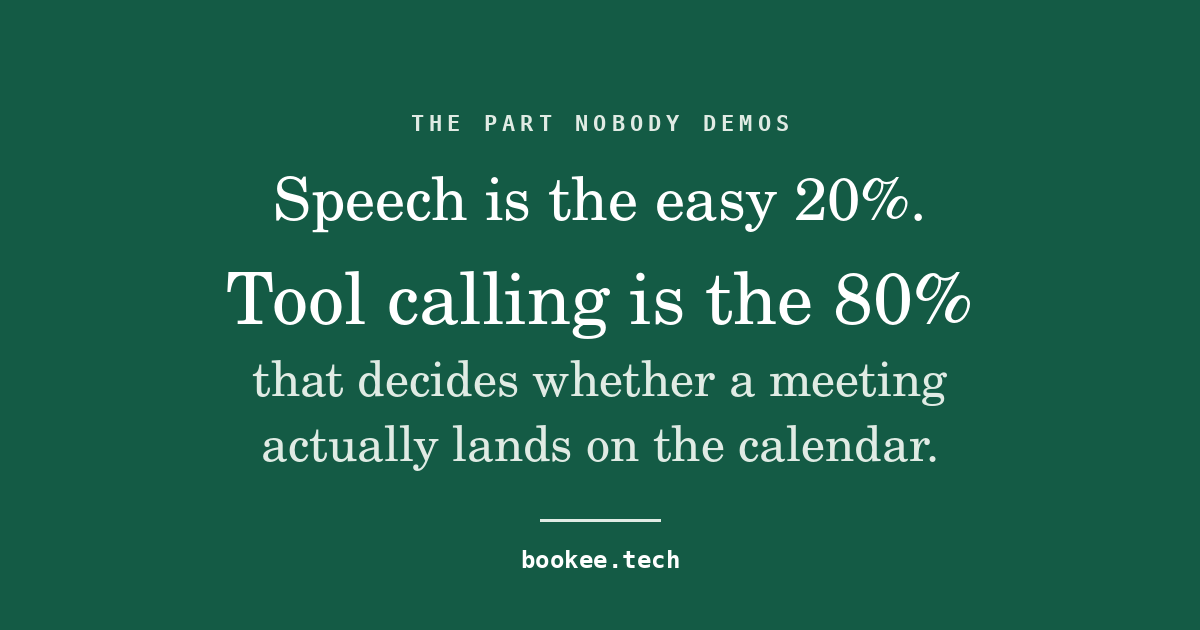
Anyone can ship an AI voice that chats. The reason most "AI receptionist" demos never become products is the tools: mid-call, the agent has to reach into your real calendar, read genuine availability, and write a booking back out. Speech is the easy part. The reliable hand-off to your systems — and back — is what decides whether a meeting actually lands on the calendar.
Where Vapi kept tripping
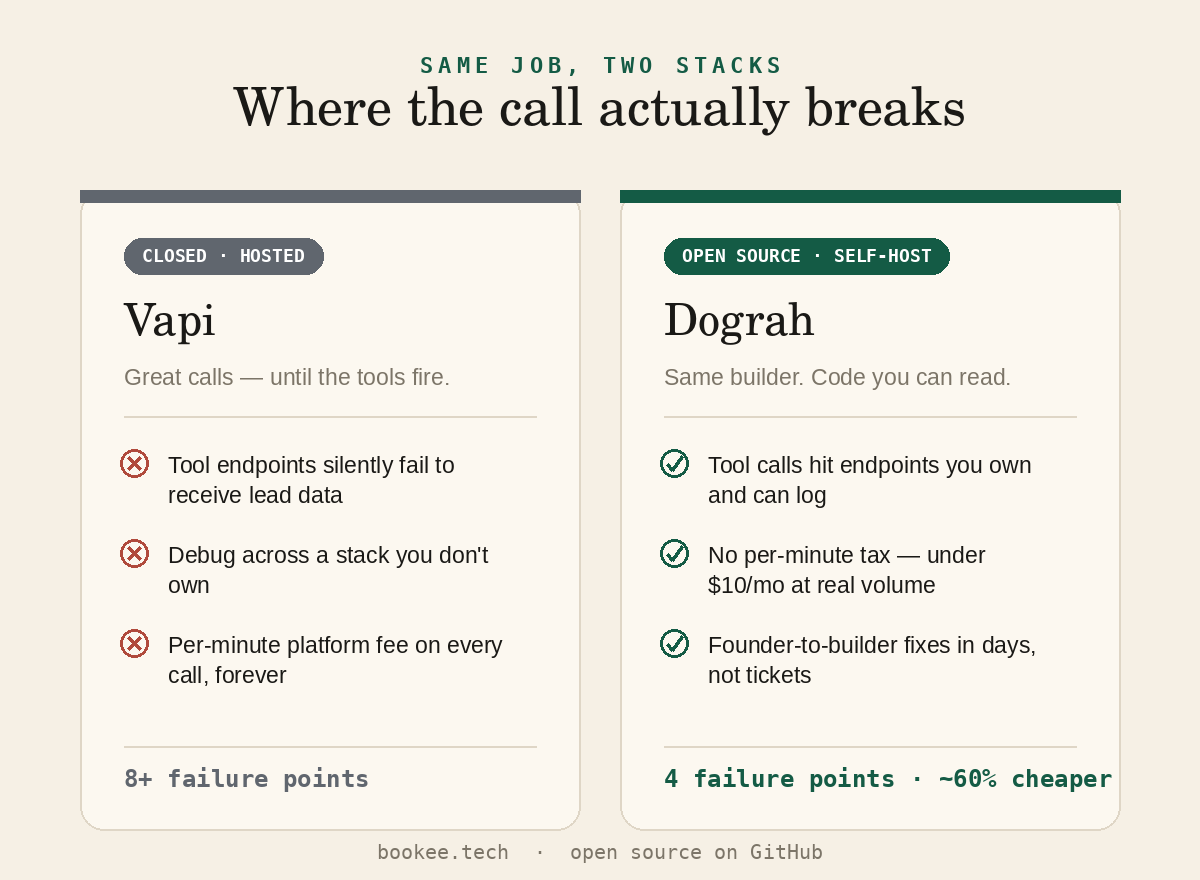
I want to be fair to Vapi: the call quality was great and the setup was fast. But my tool endpoints would intermittently not receive the data they needed, and debugging meant chasing the failure across a stack I didn't own — a workflow tool, the voice platform, and my calendar, stitched together with webhooks. When it worked it was magic; when it didn't, I was guessing. On top of that, a per-minute platform fee sat on every call, forever. For a portfolio demo, fine. For something I wanted to deploy for real clients, both the fragility and the metered pricing were dealbreakers.
See it call you
Drop your number and Bookee rings you in seconds — exactly what your next lead would hear.